From the Super Eagles to ‘Supersonic’
30 years ago this week in pop culture, politics & football

It truly is the height of summer 1996. Wannabe is officially certified Platinum, Oasis play two nights at Loch Lomond, and there are new singles from Suede and Dodgy.
So, what else happened 30 years ago this week…?
Well, this week’s newsletter takes a slightly different shape: with music and football being much more dominant, and politics & current affairs taking a bit of a back seat. But that’s hardly a bad thing, is it?!
The two main stories I’m featuring on happened across the pond and north of the border. Firstly, Nigeria’s ‘Super Eagles’ became the first African team to win Olympic football Gold over in Atlanta. Secondly, Oasis played two epic nights at Loch Lomond.
Oasis at Loch Lomond
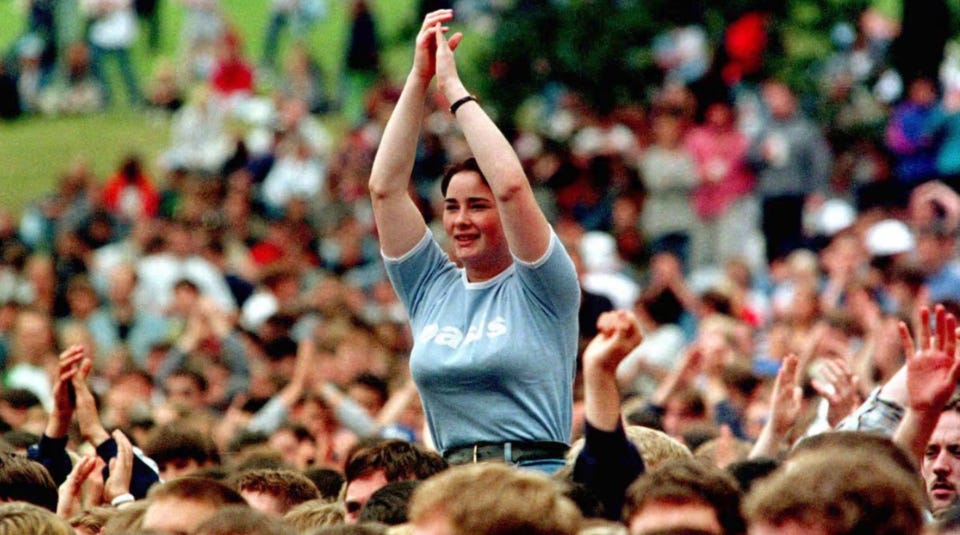
Well, as far as ‘warm-up shows’ go, these were pretty epic. A week before Oasis were to set to play gargantuan shows at Knebworth, they decided to stage two nights up at Loch Lomond — with roughly 40,000 at each.
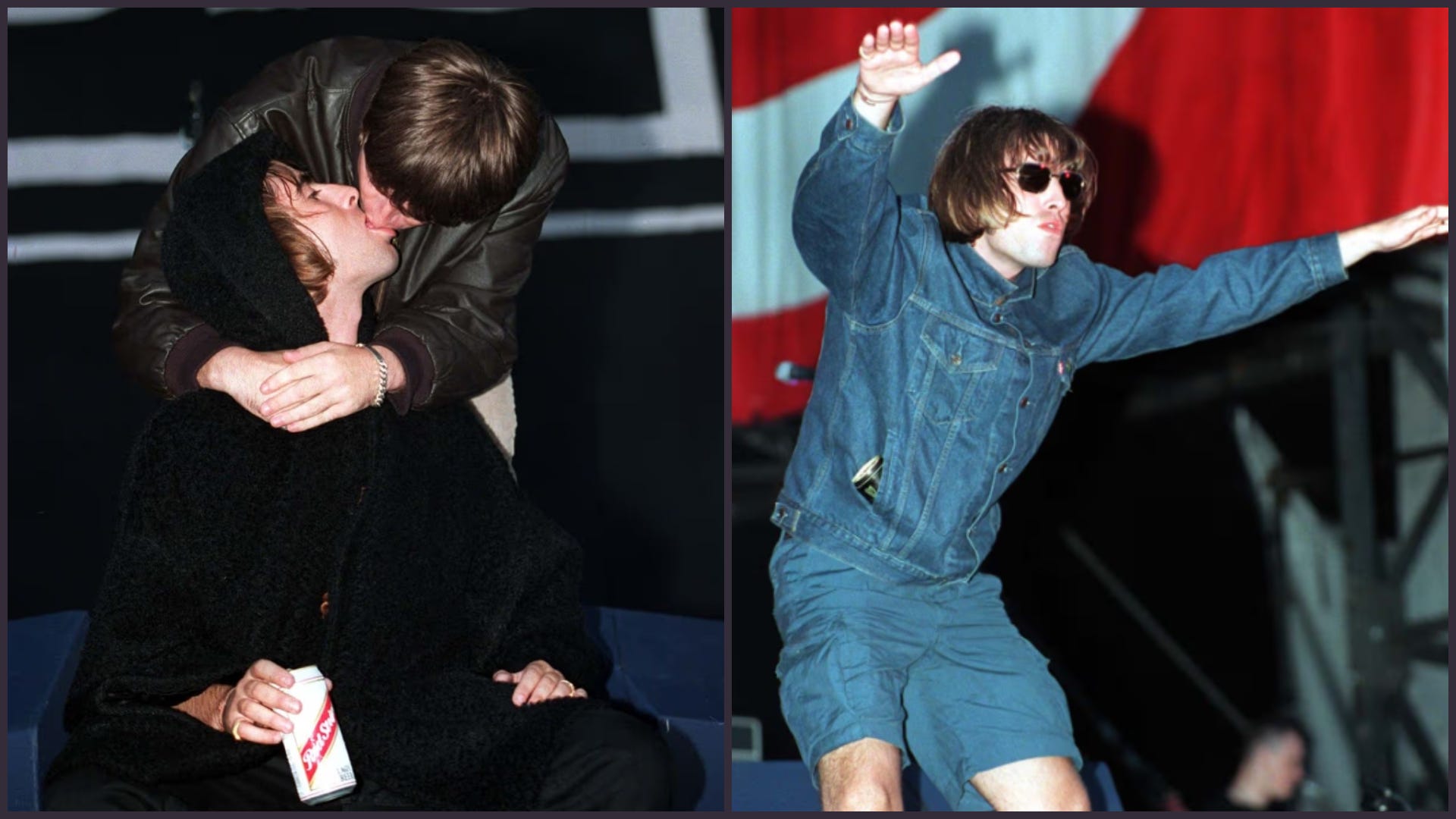
This was just over nine months since (What’s the Story) Morning Glory had been released, and the Gallagher brothers were seemingly unstoppable. The kiss (pictured below) was their own classic twos-up to the media frenzy surrounding their sibling tension.
In later years, Noel claimed that the band were at their absolute peak at this point. Their manager, Alan McGee, who had discovered the band at Glasgow’s iconic King Tut’s Wah Wah Hut venue, said this.
“The Celtic team were there on the Saturday and the next night was all the Rangers team, and the gig was great, you know what I mean?
We’ve got a great iconic photograph from that time — when the brothers kissed each other on the lips, we got one of the great Oasis photographs from that time.
They only talk about it in Scotland, if I’m being honest, cause in England they all talk about Knebworth, but Loch Lomond was a better gig from what I remember.”
Support came from Ocean Colour Scene, Cast, Black Grape, The Bootleg Beatles, and Heavy Stereo. And guess what: tickets only cost £22.50. Even if you adjust that for inflation, you’re looking at what — £50, tops? It’s an absolute bargain, no matter how you look at it.
Elsewhere in Music
Notable singles released on 29 July 1996 include Suede’s Trash and Good Enough by Dodgy. Those tracks are ‘notable’ because they’re absolutely brilliant and contributed towards defining the now iconic “Britpop summer”.
Trash was the first single from Suede’s third album, Coming Up, and was the first release in which Richard Oakes had fully replaced Bernard Butler. Peaking at No.3, it remains the band’s biggest-selling single to date.
In case anybody is interested, Suede have just announced some 30th anniversary releases for the Coming Up LP, including a 12” singles collection. Read more here.
Another single released that day — notable for different reasons — was Robbie Williams’ cover of Freedom. This was Robbie’s first solo release and, even as a confessed RW megafan, it is absolutely diabolical and should never have made it out of the mixing studio. I can only hope that poor George Michael didn’t have to hear it too many times.
What’s truly baffling is that the track would peak at No.2 — only kept from the top spot by Wannabe — and actually charted 26 places higher than the original. But then, there was a lot of heartbreak over the split of Take That, and he probably could’ve charted with a double A-Side of farts.
Shout outs also to Someone to Love by East 17, the final single from Up All Night, and Love Sensation by 911, released in the lead-up to their debut album.
In terms of chart positions, Wannabe was enjoying a 2nd of 7 consecutive weeks at the top spot. On 1 August 1996, it was officially certified as Platinum by the British Phonographic Industry.
And, rather incredibly, Alanis Morissette’s Jagged Little Pill was still at the top of the album charts — the 2nd of what would be an eight-week run at top spot, despite having been released over a year ago. It spent a total of 11 weeks at top spot during ‘96, having been released the previous June.
Football
The major story came from Atlanta, as Nigeria made history by defeating Argentina 3-2 in a dramatic final which was aired live on the BBC. They became the first African nation to win Olympic football gold, with goals from Celestine Babayaro, Daniel Amokochi, and Emmanuel Amunike — with Amunike’s coming in the 90th minute.
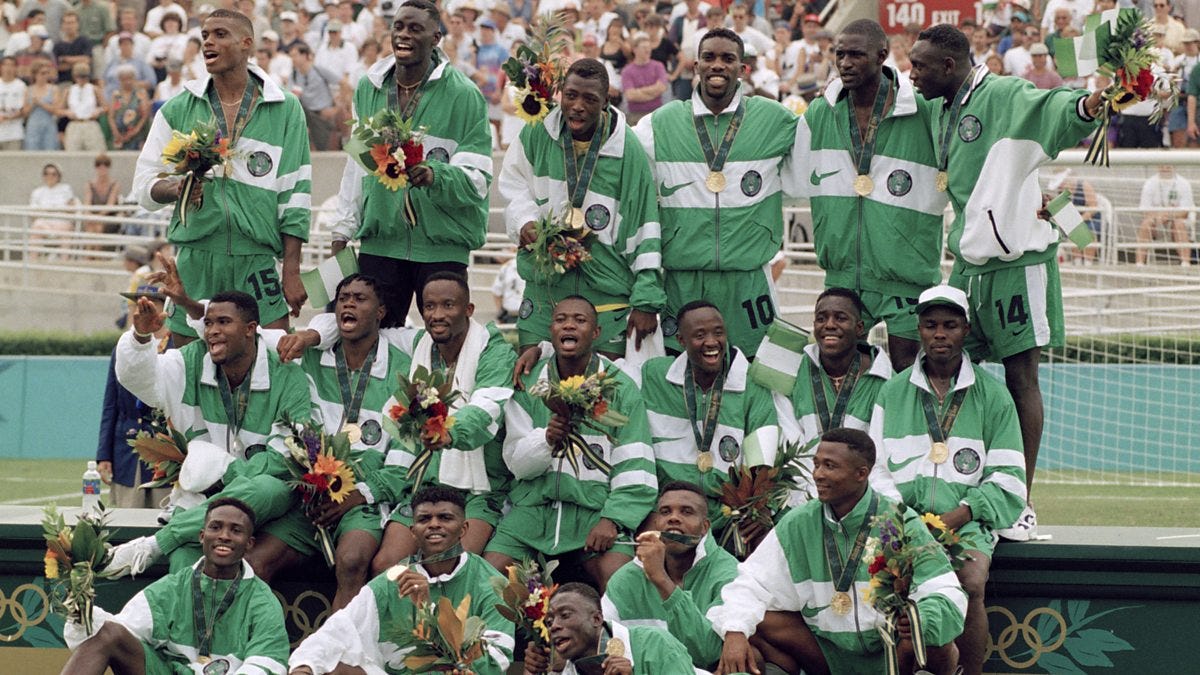
Their route to Olympic gold included a 2-0 win over Mexico in the quarter-finals, followed by an epic 4-3 victory over Brazil in the semi-finals, which saw the ‘Dream Team’ overturn a 3-1 first-half deficit.
Goals from Nwankwo Kanu in the 90th and 94th minutes sent the Super Eagles into raptures, and when they defeated another South American opponent in the final, they knew they’d live forever in the hearts of Nigerian football fans.
Those hearts had been in mouths a few times — with Jay-Jay Okocha missing a penalty late on in the semi-final, with the scoreline still at 3-2 in Brazil’s favour. You can’t even imagine how he must have felt in that moment.
Many of these Nigerian stars, of course, went on to have notable Premier League careers: Kanu signed for Arsenal in ‘99 and was a member of their ‘Invincibles’, Okocha was a star of Big Sam’s Bolton side in the mid ‘00s, and Babayaro signed for Chelsea the following year.
Amokachi was already at Everton at this stage (albeit about to move to Beşiktaş) and Taribo West had a brief loan spell at Derby; helping them to avoid relegation during the 2000/01 season.
Away from the pitch, some significant signings were made this week, with Ole Gunnar Solskjær officially signing for Man Utd on 29 July, which was followed a day later by Alan Shearer signing for Newcastle.
Shearer, of course, had been a prime target for Man Utd manager Sir Alex Ferguson, although the Scotsman’s Plan ‘B’ in Solskjær didn’t exactly work out badly, did it?
Finally, Scottish champions Rangers hosted Arsenal in a friendly at Ibrox on 3 August, with Walter Smith’s side running out 3-0 victors with a side that featured names such as Ally McCoist and Brian Laudrup.
Politics & Current Affairs
1996 saw the first arrival of effective treatments for HIV. And it was on this date — 29 July 1996 — that Ian Green OBE was diagnosed with HIV. At the time, he was given eight years to live. Until 2023, Ian was the CEO of the Terrence Higgins Trust — a leading HIV and sexual health charity — and he’s still going strong.
It’s a powerful and moving story, which he wrote about on the 25th anniversary of his diagnosis in the article below.
The world was understandably still reeling from the fallout following the Atlanta bombing. This piece in the Washington Post captures the chaos and uncertainty ahead of the Olympic Park’s reopening on 30 July.
As we learnt in last week’s post, security guard Richard Jewell rapidly went from hero to suspect. At this point, he was under intense investigation from the FBI plus the world’s media.
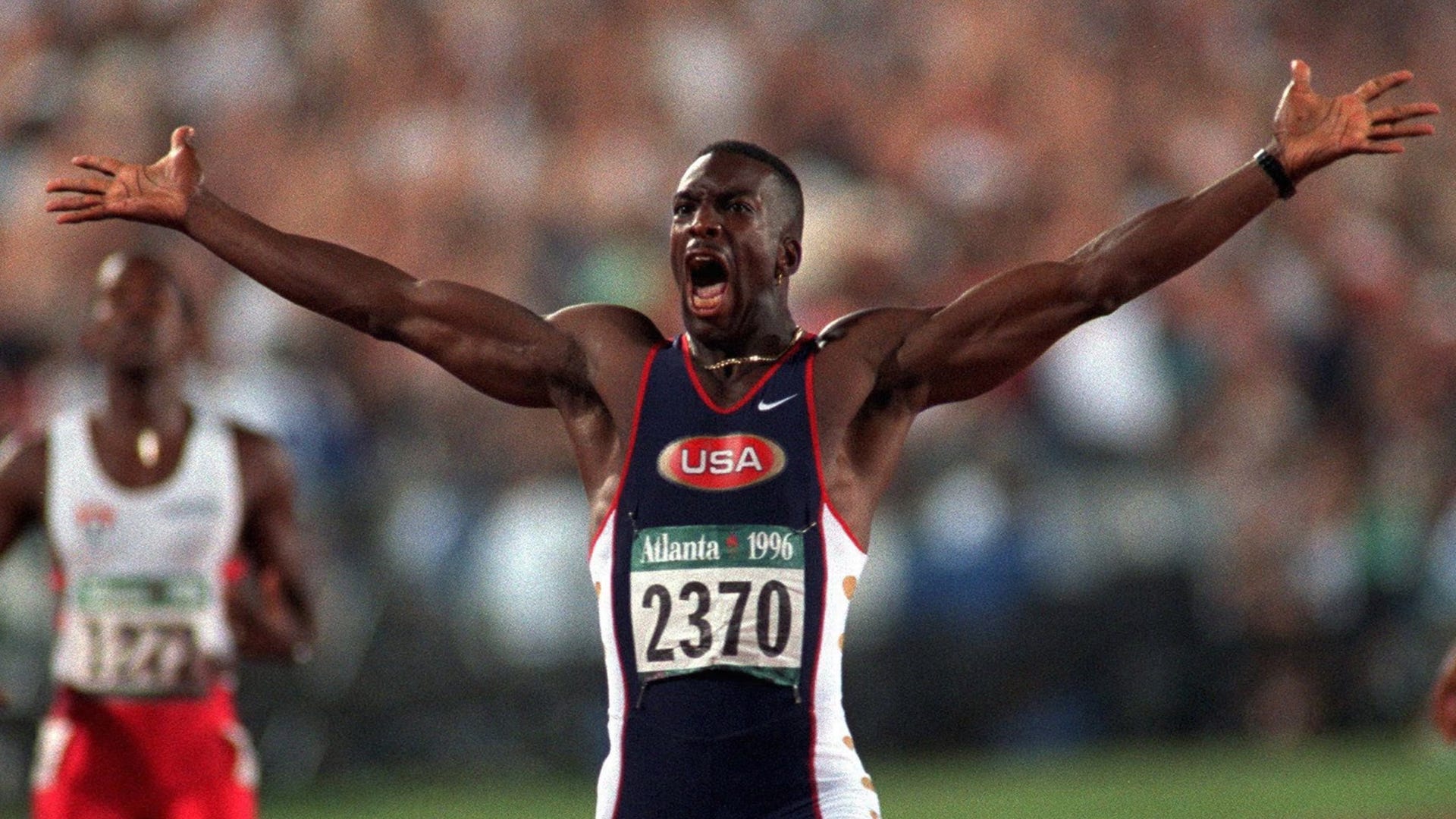
In more positive Olympics news, on 1 August, US athlete Michael Johnson won the 200m race in a world-record time of 19.32 seconds, becoming the first man to complete the 200/400m double.
Meanwhile, on these shores, on 31 July 1996, Oxford vice-chancellor Sir Peter North was appointed to lead the Independent Review of Parades & Marches, which would mark a significant step towards the creation of the Northern Ireland Parades Commission in March 1997.
Also in Northern Ireland, the loyalist paramilitary Ulster Volunteer Force (UVF) Portadown Unit was disbanded by its leadership, with an internal inquiry launched into the unit’s ‘rogue’ activity, and Sinn Féin’s Republican leaders were forced to deny an economic boycott of Protestant-owned businesses in the wake of the Drumcree crisis.
Also on 31 July, the UK government officially announced a “BSE cut-off”, meaning that any British cattle born after this date would safely be allowed to enter the food chain under strict BSE testing.
TV, Film & Showbiz
Finally, 31 July 1996 saw a famous ruling in the High Court, with actor Steven Berkoff successfully suing journalist Julie Birchill for libel, after she repeatedly called him “hideously ugly” in film reviews. The Berkoff v Birchill case set new precedents on what could be classed as defamatory.
Thanks, as always, for reading! Please share this article if you’ve enjoyed reading it, and subscribe for a weekly nose of ‘90s nostalgia.